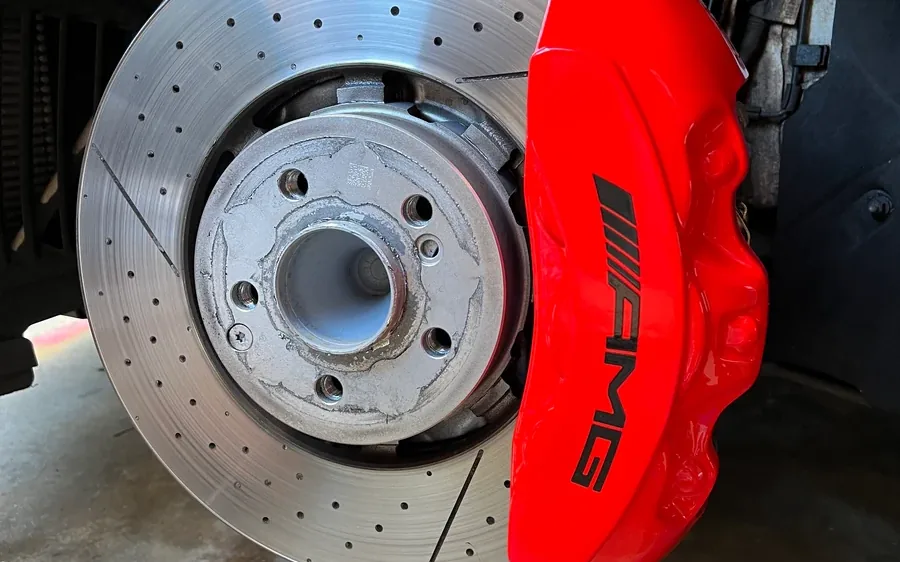
- We replace pads, rotors and the wear sensor together. New pads on worn rotors cause noise, vibration, heat and longer stops.
- The wear sensor is destroyed on purpose when the warning comes on. If it isn't replaced, the warning stays on.
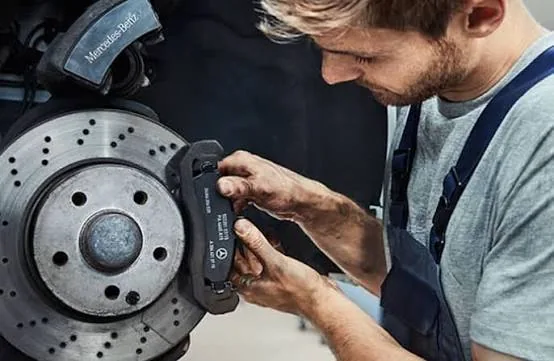
- We install factory Mercedes-Benz pads and rotors only. No aftermarket brake parts, ever.
- Inner pads wearing faster, one side wearing more, and rears wearing as fast as fronts are normal on a modern Mercedes.
- We fix the well-known 2014–2020 S-Class brake squeak during every S-Class brake job, at no extra cost.
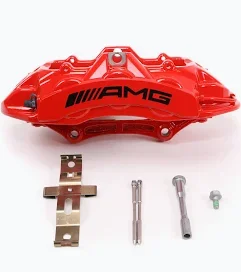
- Most Mercedes brake jobs run $600–$1,200; AMG and high-performance brakes run $1,400–$2,000+. We quote by VIN.
Your brakes do more than they used to
On an older car, the brakes only worked when your foot was on the pedal. On a modern Mercedes-Benz, the brake system is also the tool many of the driver assistance systems use to keep you safe, and they use it all the time, often without you noticing.
- Active Lane Keeping Assist can guide you back into your lane with a lane-correcting brake application on one side of the car.
- Active Brake Assist and collision prevention can brake for you when a collision is likely.
- Active Blind Spot Assist can brake one side of the car to help keep you from changing lanes into another vehicle.
- DISTRONIC adaptive cruise control slows the car for traffic ahead.
- Brake drying uses brief braking impulses in the rain to clear moisture and water droplets from the brake discs, so the brakes are ready when you need them.
All of that braking adds up. It's one reason Mercedes brakes wear differently today than they did ten years ago, and why the quality of the parts matters more than ever.
Why we replace pads and rotors together
Pads and rotors wear as a team. As the pad wears, it shapes the face of the rotor to match it. Put a brand-new, perfectly flat pad on that worn rotor and the two no longer sit flat against each other. Only part of the pad actually touches. That causes:
- Weaker braking, because less of the pad is doing the work
- Noise, from two surfaces that don't match
- Vibration in the pedal and steering wheel
- Overheating, which hurts performance even more
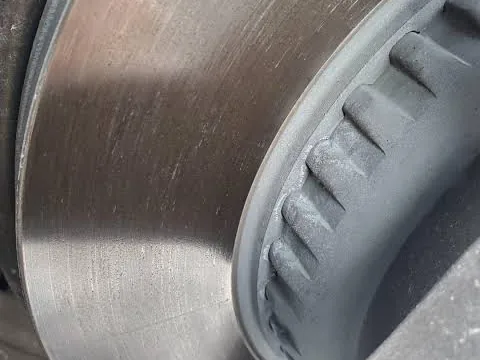
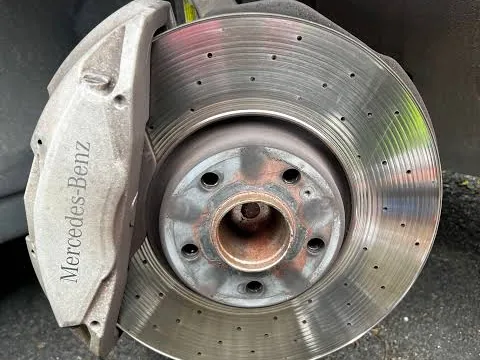
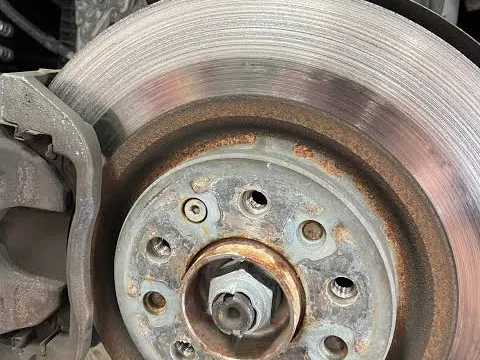
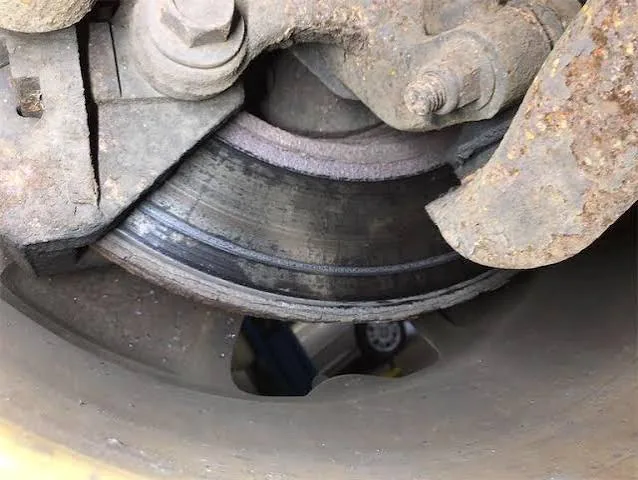
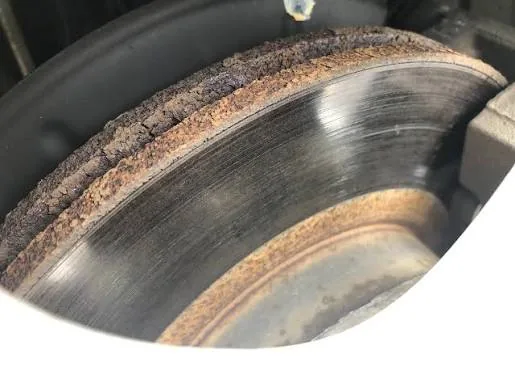
By the time pads are due, they've usually worn far enough into the rotor to leave a lip at the outer edge. New pads are thicker than the old ones, so they ride right into that lip. That usually means noise for the first few hundred miles, and we've seen it damage a new pad and cause noise that never goes away.
Can you replace just the pads? Sometimes. But it very often comes back as the classic complaint: “It's loud for the first five minutes on a cold morning, then it goes away.” We'd rather do it right once than have you living with a noisy car.
The wear sensor gets replaced every time
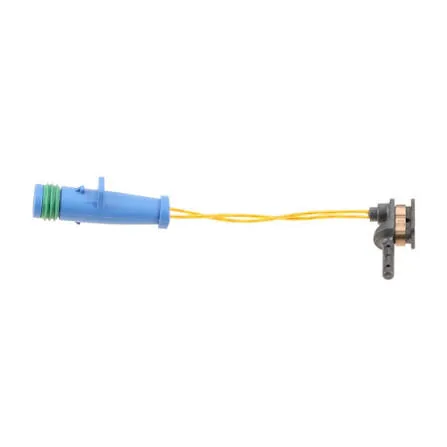
Your Mercedes has an electronic brake pad wear sensor clipped into the pad. When the pad wears down far enough, the rotor rubs through the sensor. That breaks the circuit, and the car turns on the brake wear warning in your instrument cluster.
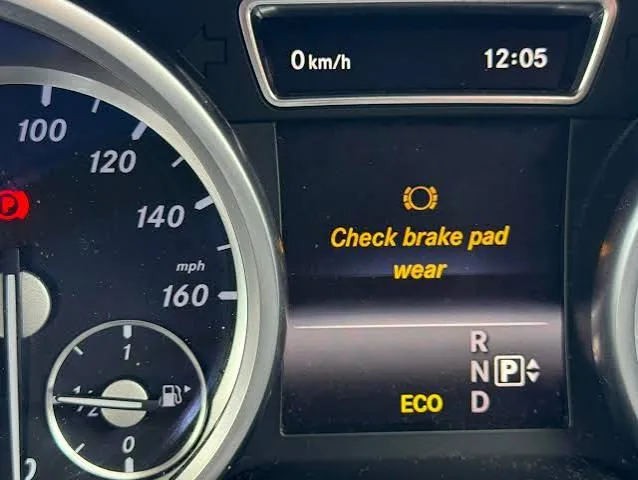
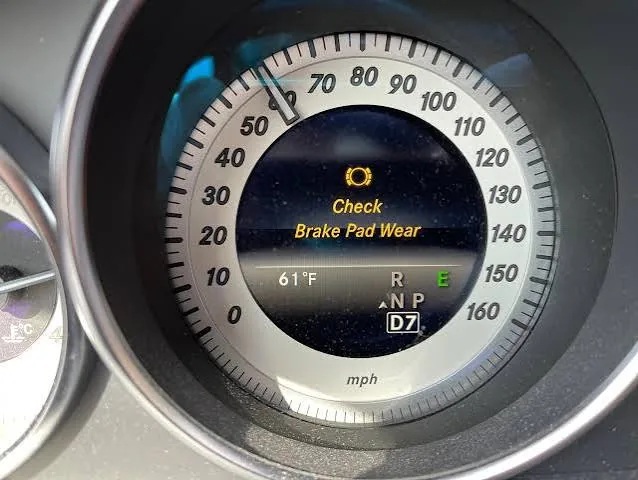
In other words, the sensor is physically damaged on purpose to do its job. It can't be reused. Many shops don't know this, replace only the pads, and send you home with the warning still on. We replace the sensor with every brake job.
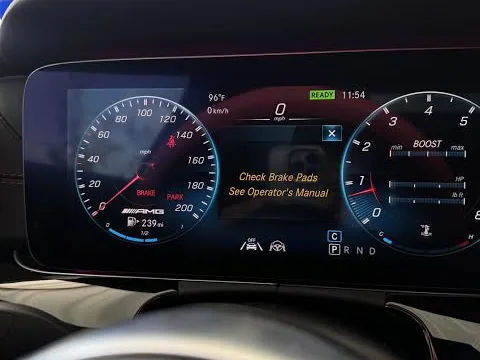
How much brake pad is left?
There are standard minimum specs for both pads and rotors. Here's how we read your pads during an inspection:
Your yearly service includes a full brake inspection, front and rear, plus a check of your brake fluid, so the wear warning should rarely be a surprise. Hopefully we've already told you about it.
Why we don't “turn” your rotors
You may have heard of having rotors turned or resurfaced on a brake lathe. On a plain, flat rotor, that can be done. But most Mercedes-Benz models today use drilled or slotted rotors, and those can't be resurfaced well. As the lathe passes over each hole or slot, it leaves chatter marks on the surface, and those chatter marks squeak when you brake.
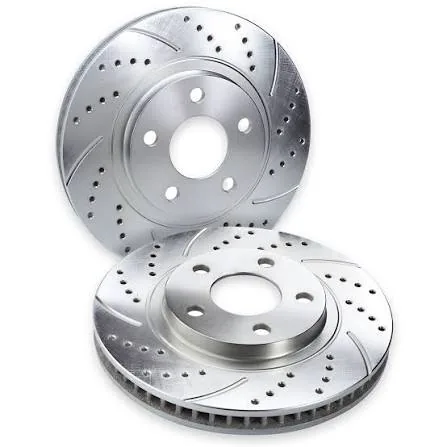
Mercedes-Benz doesn't typically resurface rotors either. Only a few models run a standard flat rotor, and by the time those need pads, the rotor is usually already at its minimum thickness. Installing new pads on a rotor at or below minimum thickness is a safety concern, so we won't do it.
Rust on the rotors
Cars that have lived up north, with road salt and winter weather, often build up rust on the rotor surface, especially on the back side. A new pad can't grip a rusty surface. It slides instead of stopping, and you get a long, slow stop when you need a short one. At that point it isn't just a comfort issue. It's a safety issue, and the rotors need to be replaced.
Wear patterns that are normal on a Mercedes
We get a lot of questions about brakes that wear “unevenly.” On a modern Mercedes-Benz, these are all normal:
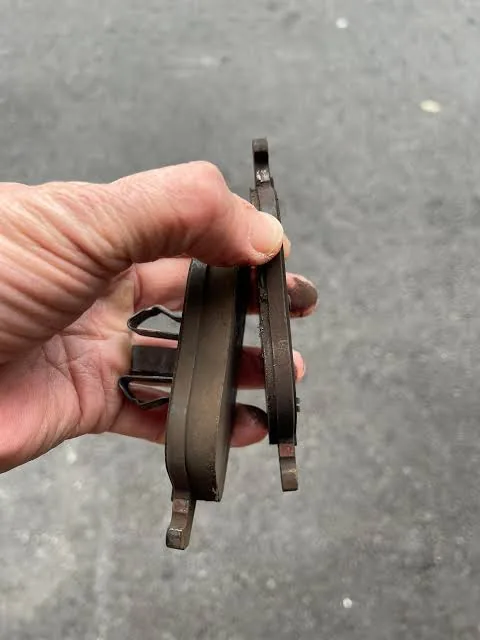
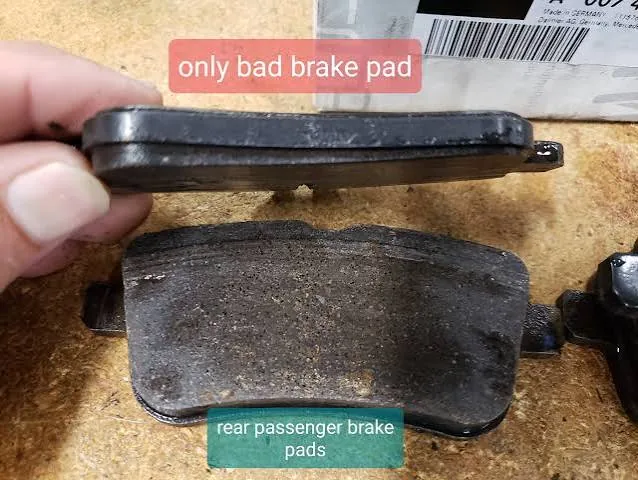
- The inner pad wears more than the outer pad. Mercedes uses floating calipers on many models, and that design naturally wears the inner pad a little faster.
- One side of the car wears more than the other. If you tend to drive closer to one side of the lane, the assist systems keep gently braking that side to pull you back to center. That's driving style, not a problem with the car.
- The rear brakes wear as fast as, or faster than, the fronts. It used to be that fronts wore first. On today's Mercedes, wearing them equally or going through rears first is standard.
Where and how you drive matters too. If you live in a hilly or mountainous area, the car needs more stopping power and the brakes wear faster than on flat roads. Aggressive or harsh braking wears them faster as well.
Factory Mercedes-Benz pads and rotors only
Mercedes-Benz vehicles are heavy, and the brakes are engineered around that weight. Genuine Mercedes-Benz pads use a denser, higher-quality friction material made to stop the car faster and smoother. They're designed to fit the Mercedes-Benz caliper and backing plate exactly, for smooth, consistent braking in all driving conditions.
Aftermarket pads are made differently: a different pad material, or a different shape or material on the backing plate. Often the difference is only about 1 millimeter in overall size. But your Mercedes is designed around exact specifications, and that 1 mm is enough to keep the pads from releasing the way they should. They stick, drag and make noise, which wears them out even faster. The results we see from aftermarket brakes:
- Faster wear
- Longer stopping distances
- Noisier stops
- A hard or awkward-feeling pedal
Brake fluid: flush it with your brakes
Brake fluid ages and breaks down over time. Old fluid can make the car take longer to stop. That's called brake fade, and on long downhill grades in the mountains it can do real harm.
Unless you have a record of a recent flush, we highly recommend a brake fluid flush any time you do a brake job. It keeps the fluid in good condition and your pedal firm and consistent. Our brake flush is $172, tax included.
The S-Class brake squeak, fixed for good
The 2014–2020 S-Class is notorious for a squeak while stopping. It's a fitment issue between the pads and the paint on the calipers, a design issue with the car, not worn brakes. Many shops tell you that you need new pads and rotors. You put them on, and a week later the squeak is back.
We fix the cause. During your S-Class brake job, we carefully sand a thin layer of paint off where the pads ride in the caliper. That gives the pads just enough room to release freely, and the squeak goes away until the brakes wear out from normal use. It's standard practice here, at no extra cost.
Elite Benz vs. the dealer
At most dealerships, brake jobs go to the least experienced, lowest-paid technicians, because that's where the dealer makes the most profit. A real master technician rarely does a brake job there. At Elite Benz, every technician is master certified with 13+ years at Mercedes-Benz dealers, and every one of them knows exactly how a proper Mercedes brake service is done.
- We fully clean and lubricate the brake system: backing plates, guide pins, rattle clips, retaining springs and the parking brake mechanism.
- We solve the 2014–2020 S-Class squeak as standard practice, at no extra cost.
- We recommend brakes when you actually need them. Dealers often recommend brakes far sooner than needed, or without explaining why.
- We explain our reasoning every time, with photos of what we found sent to your phone, so you understand exactly what's needed and why.
What every Elite Benz brake job includes
Every Mercedes brake service at our Summerville shop includes:
- New factory Mercedes-Benz brake pads
- New factory Mercedes-Benz rotors
- New brake pad wear sensor
- Full cleaning of backing plates, guide pins, rattle clips and retaining springs
- Proper lubrication of all slide and contact points
- Parking brake mechanism cleaned and checked
- S-Class squeak fix on 2014–2020 S-Class, at no extra cost
- Brake fluid condition checked, with a flush recommended if there's no recent record
- Photos of your old brakes sent to your phone
- 3-year / 36,000-mile warranty
What does a Mercedes brake job cost?
Pricing varies a lot, because Mercedes uses several different brake setups on the same model line. A C300, a C400 and a C63 can all have different brakes. Our labor is the same either way. It's the parts that change.
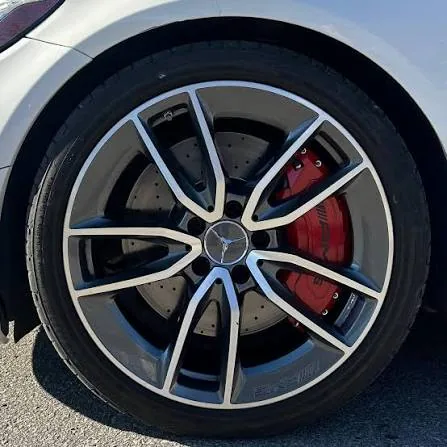
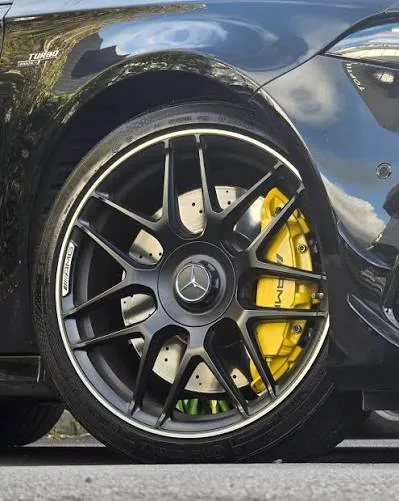
That's why we can't give an accurate brake quote over the phone without your VIN. The VIN lets us guarantee the right parts and the right cost. We also prefer to see the car first. You can't always see the inner pad, and an outer pad that looks fine can be hiding an inner pad that's worn out. We'll gladly give you a quote. We just need your VIN and a quick look to confirm what your car really needs.
Common questions
Do I really need new rotors with my brake pads?
In almost every case, yes. Worn rotors have an uneven face and a lip at the edge, so new pads won't sit flat. That causes noise, vibration, overheating and weaker braking. Most Mercedes rotors are also drilled or slotted and can't be resurfaced cleanly.
Why is my brake wear warning still on after new brakes?
Most likely the wear sensor wasn't replaced. The sensor is damaged on purpose when the pads wear down, so it has to be replaced with every brake job. We replace it every time.
Can you install aftermarket brake pads to save money?
No. We install factory Mercedes-Benz pads and rotors only. Aftermarket pads often differ by about 1 mm and in material, which leads to sticking, noise, faster wear and longer stops.
Why are my inner pads more worn than my outer pads?
That's normal on Mercedes models with floating calipers. It's also normal for one side to wear more than the other, and for rear brakes to wear as fast as or faster than the fronts.
How much does a Mercedes brake job cost?
Most standard models run about $600 to $1,200; AMG and high-performance brakes run about $1,400 to $2,000 or more. Because brakes vary even within a model line, we need your VIN, and ideally a quick look at the car, to give an exact quote.
Can you fix my S-Class brake squeak?
Yes. On 2014–2020 S-Class models we remove a thin layer of caliper paint where the pads ride so they release freely. It's included with every S-Class brake job at no extra cost.
Should I flush my brake fluid with a brake job?
If you don't have a record of a recent flush, yes. Aged brake fluid can cause brake fade and longer stops. Our brake flush is $172, tax included.
Questions about your Mercedes?
Talk to a Mercedes technician directly, or book online in about a minute.
This guide is general information from our technicians' experience and isn't a diagnosis of your vehicle. Prices are averages, include tax where noted, and are confirmed in writing before any work begins. Elite Benz is an independent Mercedes-Benz specialist, not affiliated with or endorsed by Mercedes-Benz USA.